Will Your Automatic Gate Work During a Power Outage? Here’s Your Answer
A power outage does not necessarily leave you trapped behind your driveway gate. Most mains-powered automatic gates will stop moving when the electricity supply is interrupted, but the right backup system or manual-release mechanism can keep your property accessible.
The exact response depends on the gate motor, power setup, and condition of the backup battery. Some systems continue operating from stored battery power. Others need to be disengaged and moved manually until mains power returns.
Key Point:
A mains-only automatic gate will normally stop operating during a power outage. A gate with a charged backup battery or correctly sized solar system may continue working. Most professionally installed motors also have a manual release that allows the gate to be opened by hand.
What Happens to an Automatic Gate During a Power Outage?
When mains power fails, electricity stops reaching the motor and control board. The gate will generally remain in the position it was in when the outage occurred. It will not necessarily open automatically.
Remote controls, keypads, powered intercoms, and app-based access may also stop working if they rely on the same power supply.
The outcome will usually fall into one of three categories:
- A backup battery continues powering the system.
- A solar-charged battery keeps the gate operating.
- The motor must be disengaged using its manual release.
This is why the power configuration should be considered when planning automatic gates in Perth, particularly for properties where the gate provides the only vehicle entrance.
Will Every Automatic Gate Stop Working Without Mains Power?
Not every system responds in the same way.
| Gate power setup | What normally happens | What you may need to do |
| Mains power only | The motor stops operating | Use the manual release |
| Mains power with battery backup | The gate may continue for a limited period | Reduce unnecessary gate cycles |
| Solar system with battery storage | The gate may continue operating normally | Monitor battery condition |
| Flat or faulty backup battery | The gate stops despite having backup equipment | Use manual mode and arrange an inspection |
A properly configured 24V motor may be suitable for battery backup or solar charging.
The number of cycles available from a battery cannot be guaranteed without checking the individual system. Battery age, gate weight, motor size, wind resistance, accessory load and the number of daily openings all affect performance.
For properties with limited or unreliable mains access, solar automatic gates with battery backup can provide a practical alternative. Correct panel and battery sizing remains essential, especially when the system also powers safety beams, keypads, intercoms or smart controls.
How Do You Open an Automatic Gate During a Blackout?
Most gate motors include a manual-release mechanism. The release method varies between motors, so always follow the instructions supplied with your particular model.
1. Confirm that the problem is a power outage
Check whether other electrical equipment at the property has also stopped working. A gate-only fault may be caused by a tripped circuit, damaged component, flat remote battery or obstruction rather than a wider outage.
Do not open electrical enclosures or alter fixed wiring. In Western Australia, electrical installation work must be completed by an appropriately licensed electrical worker.
2. Keep the gate area clear
Move vehicles, children, pets and other people away from the gate’s travel path. A large gate can be heavy, and movement may be less controlled after the motor is disengaged.
Extra care is needed on sloping driveways or in strong winds.
3. Locate the manual-release mechanism
The release is generally found on or near the gate motor. It may require a key, lever, or model-specific tool.
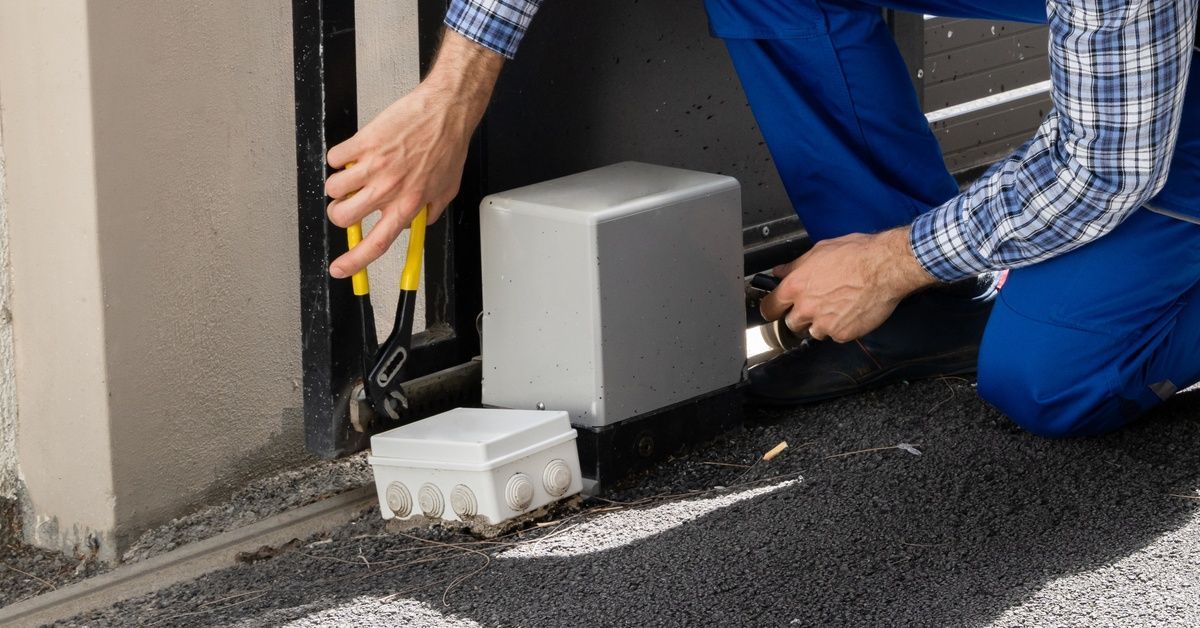
For a sliding gate, the release is commonly located on the motor beside the gate track. Swing gate releases may be positioned on the motor arm, ram, or underground operator.
4. Disengage the motor
Use the supplied key or tool and follow the motor manufacturer’s release procedure. This disconnects the gate from the automated drive so it can be moved manually.
Never force the release, dismantle the motor, or use an improvised tool.
5. Move and secure the gate carefully
Open the gate slowly by hand. Stop if it feels unusually heavy, catches on the track, moves unevenly or appears unstable.
Once open, secure it so it cannot roll or swing unexpectedly. A heavy gate that moves freely in wind or on a gradient can cause serious injury or property damage.
Keep the release key in a secure place that authorised household members can access.
Is the Process Different for Sliding and Swing Gates?
Sliding gates
A sliding gate normally travels along a ground track or uses a cantilever system. Once the motor is released, the gate is moved sideways by hand.
Before moving it:
- Check the track for stones, sticks and other debris.
- Confirm the gate has not left its rollers or guides.
- Do not force a gate that appears jammed or misaligned.
A large or heavy sliding gate may require professional assistance.
Swing gates
Swing gate motors may use linear arms, articulated arms, or underground operators. Double swing gates can have a separate release mechanism on each gate leaf.
Control the gate firmly after disengaging it. Wind, uneven ground and driveway slope can cause a swing gate to move faster than expected.
What Should You Do When the Power Returns?
Do not immediately operate the remote while the motor remains disengaged.
First:
- Make sure the driveway and gate path are clear.
- Return the gate to the position specified in the motor instructions.
- Re-engage and lock the manual-release mechanism.
- Confirm that mains power has returned.
- Test one full opening and closing cycle.
- Check the remotes, keypad, safety beams and intercom.
- Listen for grinding, clicking or unusual motor noise.
Some motors resume normal operation immediately. Others may require a reset or position-relearning process.
If your gate is not working, it may have a depleted backup battery, tripped protection device, controller fault or release mechanism that has not been fully re-engaged.
When Should You Call a Gate Technician?
Do not attempt to force or dismantle the system when:
- The release key is lost or broken.
- The release mechanism will not disengage.
- The gate has come off its track.
- The gate feels too heavy or unstable to move safely.
- The motor enclosure is wet, burnt or visibly damaged.
- The gate repeatedly fails after power is restored.
- Fixed electrical wiring needs inspection or repair.
WA Government confirms that electrical installation work must be performed by a licensed person. A gate technician can assess the automation equipment, while mains wiring should be handled by a suitably licensed electrical contractor.
Frequently Asked Questions
1. Does an automatic gate open automatically during a power outage?
Usually not. Most mains-only gates remain in their current position when electricity fails. Automatic opening during an outage requires a system specifically configured for that response. Otherwise, battery backup or manual release is used.
2. Can I open an electric gate without its release key?
Do not force the gate or dismantle the motor. The correct release tool depends on the motor model. Contact the installer or an experienced gate technician for a safe, model-appropriate solution.
3. How long does an automatic gate battery backup last?
Battery duration varies according to battery capacity and condition, gate weight, motor size, accessory load and usage frequency. Check the specifications for the installed motor rather than relying on a general cycle estimate.
4. Will my gate remote work during a blackout?
The remote may still transmit a signal, but the gate will only respond if the controller and motor remain powered by a functioning battery, solar system, generator or other compatible backup supply.
5. Can an existing automatic gate have battery backup added?
In many cases, yes. Compatibility depends on the motor voltage, control board, and existing power configuration. A gate specialist should inspect the equipment before recommending a battery, charger or motor upgrade.