Coconut Husk Products: Understanding the Difference Between Coconut Coir and Coconut Fiber
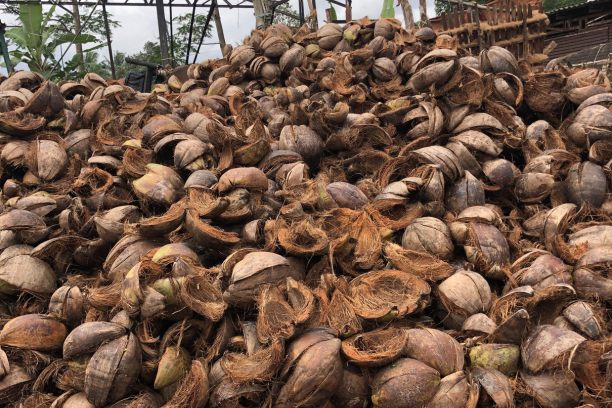
Introduction to Coconut Husk and Its Uses
Coconut husk is a valuable natural material obtained from the outer covering of mature coconuts. Instead of being discarded as agricultural waste, it can be processed into useful materials for gardening, agriculture, manufacturing, construction, and other industries. As demand for sustainable materials continues to grow, coconut husk has become an important resource for businesses seeking renewable alternatives to synthetic products.
The husk contains natural fibers and a softer, spongy material known as pith. Both components have different properties and applications, making coconut husk suitable for producing a wide range of commercial products.
Understanding Coconut Husk Products
Coconut husk products are materials manufactured from the fibrous outer layer of coconuts. Depending on the intended application, the husk can be separated, cleaned, dried, compressed, or processed into different forms. These products are widely used in agriculture, horticulture, landscaping, household applications, and industrial manufacturing.
One popular product is coco peat, which is made from the pith and short fibers found within the coconut husk. Coco peat is valued for its ability to retain moisture while maintaining a suitable growing environment for plant roots. It is commonly used in potting mixes, seed germination, hydroponic cultivation, and commercial greenhouse production.
Another important product is coconut coir fiber, which consists of longer, stronger fibers extracted from the husk. These fibers are used to manufacture ropes, mats, brushes, doormats, erosion control blankets, and various gardening materials.
Understanding Coconut Coir and Coconut Fiber
Coconut coir and coconut fiber are closely related terms that are often used interchangeably. Both generally refer to natural fibers obtained from the outer husk of a coconut. However, terminology can vary between suppliers, manufacturers, and industries.
Coconut coir is the commonly recognized commercial term for the fibrous material extracted from coconut husks. It is widely used in horticulture, gardening, textiles, and erosion control. Coconut fiber is a general expression describing the fibrous strands obtained from the husk.
Understanding the terminology is important when purchasing raw materials. Buyers should check product specifications, fiber length, moisture content, processing methods, and intended applications rather than relying on product names alone.
Coconut Coir vs Coconut Fiber: Key Differences
When comparing coconut coir vs coconut fiber, the most important point is that these terms often describe the same underlying material. In many commercial contexts, coconut coir is simply another name for coconut fiber. Nevertheless, suppliers may use the expressions differently to distinguish between product categories or grades.
Coconut coir is commonly associated with materials derived from coconut husks, including fibers and pith-based growing media. Coconut fiber is frequently used to describe the fibrous strands themselves, especially when discussing their physical characteristics and manufacturing applications.
The length and strength of the fibers influence their suitability for different purposes. Long fibers are often selected for rope production, brushes, mats, and other products that require structural strength. Short fibers and finer particles may be used in composite materials, growing media, or other applications where their specific texture is beneficial.
Processing methods also affect the final product. Raw fibers may contain dust, pith, or other natural residues that must be removed according to the intended use. Manufacturers may wash, dry, grade, or treat the fibers to achieve the required quality.
Applications in Agriculture and Horticulture
Agriculture is one of the largest application areas for coconut husk materials. Coco peat, coco chips, and coconut coir fibers provide different benefits for plant cultivation and soil management.
Coco peat is widely used as a growing medium because it can absorb and retain water. When properly processed, it helps maintain moisture around plant roots while providing a lightweight alternative to some conventional growing materials. It is frequently used for vegetables, ornamental plants, seedlings, and greenhouse crops.
Coco chips offer a coarser structure that supports drainage and air circulation around roots. They are particularly useful for certain orchids and other plants that benefit from an open growing medium.
Coconut coir fibers are also used in gardening and landscaping. They can be incorporated into erosion control products, plant support systems, mulch materials, and biodegradable growing accessories. When applied appropriately, these products can help protect soil surfaces and support vegetation establishment.
Product quality remains essential. Growing media should be evaluated for salinity, pH, moisture content, and consistency, especially when used for sensitive crops or commercial cultivation.
Industrial and Commercial Uses
Beyond agriculture, coconut fiber has applications in manufacturing and industrial production. Its natural texture, strength, and flexibility make it suitable for products that require durable fibrous materials.
Manufacturers use coconut fibers to produce brushes, ropes, mats, upholstery materials, and various household products. Coir mats are commonly placed at entrances to help remove dirt from footwear, while brushes made from coir can be used for cleaning tasks.
Coconut fibers are also used in selected automotive and furniture applications. When processed and combined with suitable binders, they can become part of composite materials used in certain interior components, cushioning products, and other manufactured goods.
In landscaping and environmental management, coir logs, mats, and blankets can help stabilize exposed soil and support erosion control. Their performance depends on installation methods, site conditions, and material specifications.
Environmental Benefits of Coconut Husk Materials
Coconut husk materials can contribute to more efficient agricultural waste management. Since coconuts are harvested in large quantities in many tropical countries, their husks represent a substantial source of renewable raw material. Converting these husks into useful products can create additional economic value while reducing agricultural residue.
Many coconut husk products are biodegradable under suitable environmental conditions. Natural coir fibers can gradually decompose, although the rate depends on temperature, moisture, microorganisms, and product treatment.
The use of coconut-based growing media can also support resource efficiency when products are sourced and managed responsibly. Coco peat and coco chips may be reused in some cultivation systems, depending on crop health, growing conditions, and sanitation requirements.
However, natural materials are not automatically impact-free. Processing, washing, drying, transportation, and packaging all consume resources. Buyers interested in sustainability should consider the complete supply chain, including responsible sourcing and processing efficiency.
Choosing the Right Coconut Husk Material
Selecting the right coconut husk material begins with identifying its intended application. A horticultural supplier may require coco peat with consistent moisture retention and low salinity, while a manufacturer of brushes or mats may prioritize fiber length, strength, and cleanliness.
Product specifications should be reviewed before an order is placed. Buyers should ask suppliers about raw material origin, processing methods, moisture content, fiber dimensions, packaging options, and available quality documentation.
Packaging is another important consideration, especially for international shipments. Compressed blocks and bales can reduce storage requirements and improve shipping efficiency. However, packaging must protect the product from contamination and unwanted moisture during transportation.
Businesses purchasing in bulk should also evaluate supply capacity, production consistency, communication, and delivery arrangements. Requesting samples before confirming a large order can help buyers assess whether the material meets their expectations.
Future Opportunities for Coconut Husk Materials
The market for coconut-derived materials offers opportunities for businesses interested in renewable resources and practical alternatives to conventional materials. Advances in processing technology may improve fiber separation, product consistency, and the utilization of different husk components.
Agriculture, horticulture, landscaping, and manufacturing are likely to remain important application areas. Continued research into natural composites and biodegradable materials may also create additional opportunities for coconut husk resources.
Understanding the characteristics of each product is essential to taking advantage of these opportunities. Differences in fiber length, processing, and product grade can significantly affect performance. By evaluating technical specifications and working with dependable suppliers, businesses can select materials that meet their operational needs.
Contact Information
Visi Arlion International PVT LTD
WhatsApp: (+62)812 1233 3590 (Ms. Maria)
Email: [email protected]